
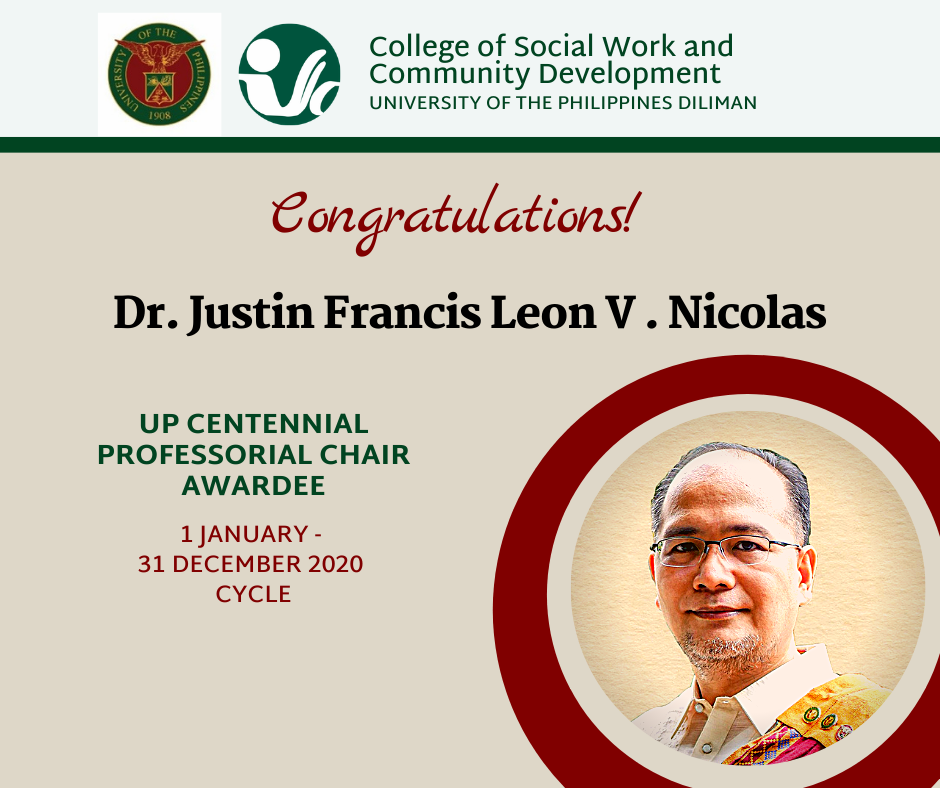
CSWCD Congratulates Dr. Justin Francis Leon V. Nicolas for being awarded the UP Centennial Professorial Chair Award for the 2019-2020 round



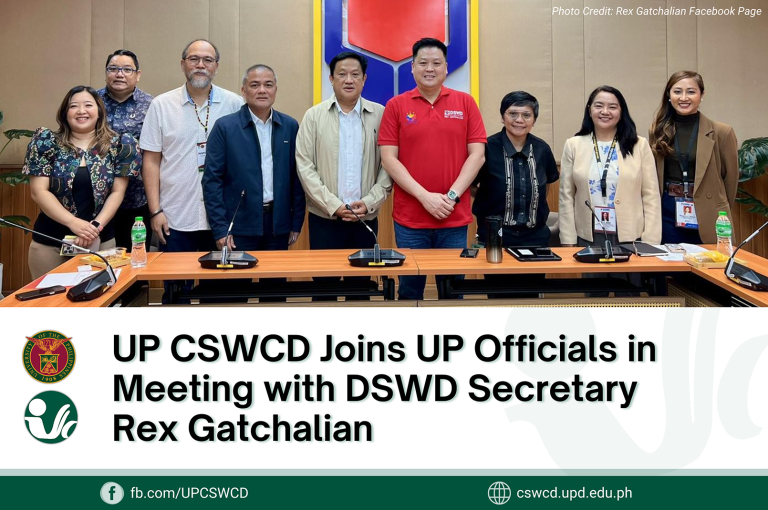
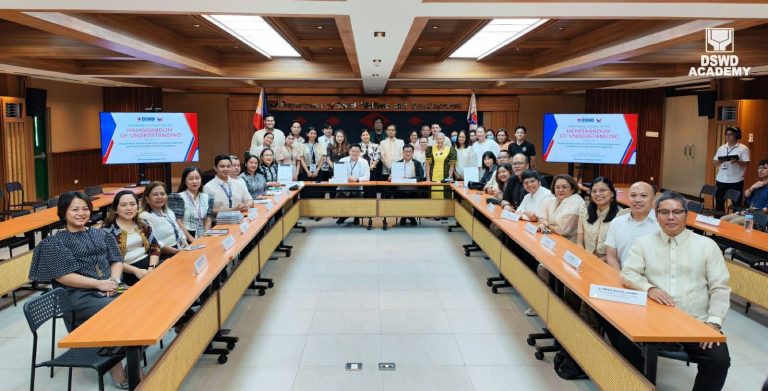
UP CSWCD Dean Prof. Justin Nicolas participated in a meeting between UP Executives, led by President Angelo Jimenez, and DSWD Secretary Rex Gatchalian and his team on January 9, 2026, at the DSWD Central Office. The discussion centered on strengthening UP’s commitment to public service by exploring partnerships and collaborative initiatives with the DSWD across…
As the main component of CSWCD-KALAHI-CIDSS Partnership, four social work students of the CSWCD who are fully committed to serve, uplift and transform communities through government service and academic support have just been deployed in Nabua, Camarines Sur. For their Field Instruction Program (FIP) this semester, Aedry Absalon, Janna Palmenco, Abigail Recarro and Abigail Soriano…
The Marcoses were forced to go into exile as an aftermath of the EDSA revolution in 1986. Five years after her exile, Imelda Marcos was allowed by then Pres. Corazon Aquino to return to the country to face more than 60 criminal and civil charges against her, including charges of graft and tax evasion (Rappler,…
Any election is defined as an exercise of rights and power of the people in forming the government that carries their mandate and implement their decision. This is the reason any electoral exercise has always been considered as a sacred act.
Yet this definition is far and even runs counter in practice and reality of our elections where the obligation to elect is significantly narrowed down by our choices among the candidates. The electoral landscape and the hold of power at various levels are painted by a dynasty rule of families and clans in the form and essence of feudal patronage politics. Positions from the local to the national level has been regularly shifting within members of families and among relatives of traditional politicians and have been reduced into political fiefdoms where the rule of the governance is amassing wealth in the name of public service. Together with the conditions and institutions, culture and mindset that support and promote it, feudal patronage politics prevents the realization and conscious engagement of the people in their democratic rights and freedom to decide and ensure the realization of their decisions. Consequently, what we have today is elite democracy instead of people’s democracy.