
FEB 26 to Mar 01 | CSWCD College Week 2024


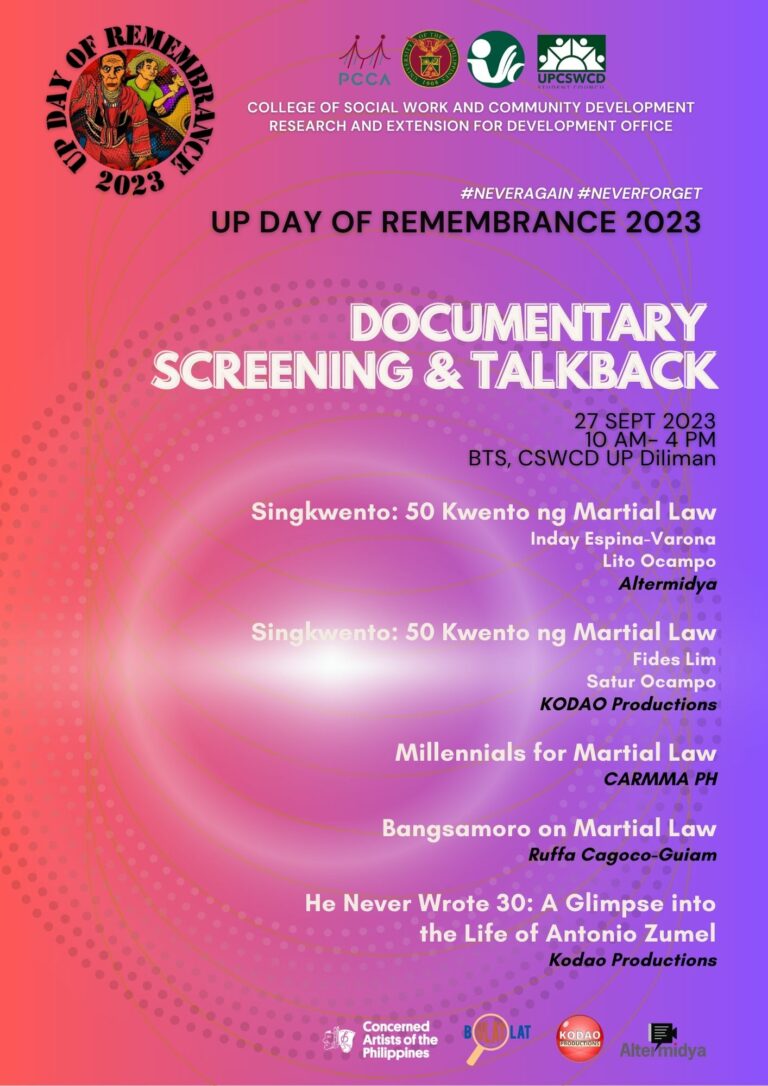
Despite inclement weather brought by the southwest monsoon, the College of Social Work and Community Development (CSWCD) of the University of the Philippines Diliman successfully…
Among 193 countries, the Philippines has the highest risk of extreme natural events and negative climate change impact for the years 2022, 2023, and 2024…
The Marcoses were forced to go into exile as an aftermath of the EDSA revolution in 1986. Five years after her exile, Imelda Marcos was…
The UP College of Social Work and Community Development (CSWCD) congratulates Professor Emeritus and former Dean Dr. Amaryllis Tiglao-Torres on her appointment as Philippine Representative…
Any election is defined as an exercise of rights and power of the people in forming the government that carries their mandate and implement their decision. This is the reason any electoral exercise has always been considered as a sacred act.
Yet this definition is far and even runs counter in practice and reality of our elections where the obligation to elect is significantly narrowed down by our choices among the candidates. The electoral landscape and the hold of power at various levels are painted by a dynasty rule of families and clans in the form and essence of feudal patronage politics. Positions from the local to the national level has been regularly shifting within members of families and among relatives of traditional politicians and have been reduced into political fiefdoms where the rule of the governance is amassing wealth in the name of public service. Together with the conditions and institutions, culture and mindset that support and promote it, feudal patronage politics prevents the realization and conscious engagement of the people in their democratic rights and freedom to decide and ensure the realization of their decisions. Consequently, what we have today is elite democracy instead of people’s democracy.